
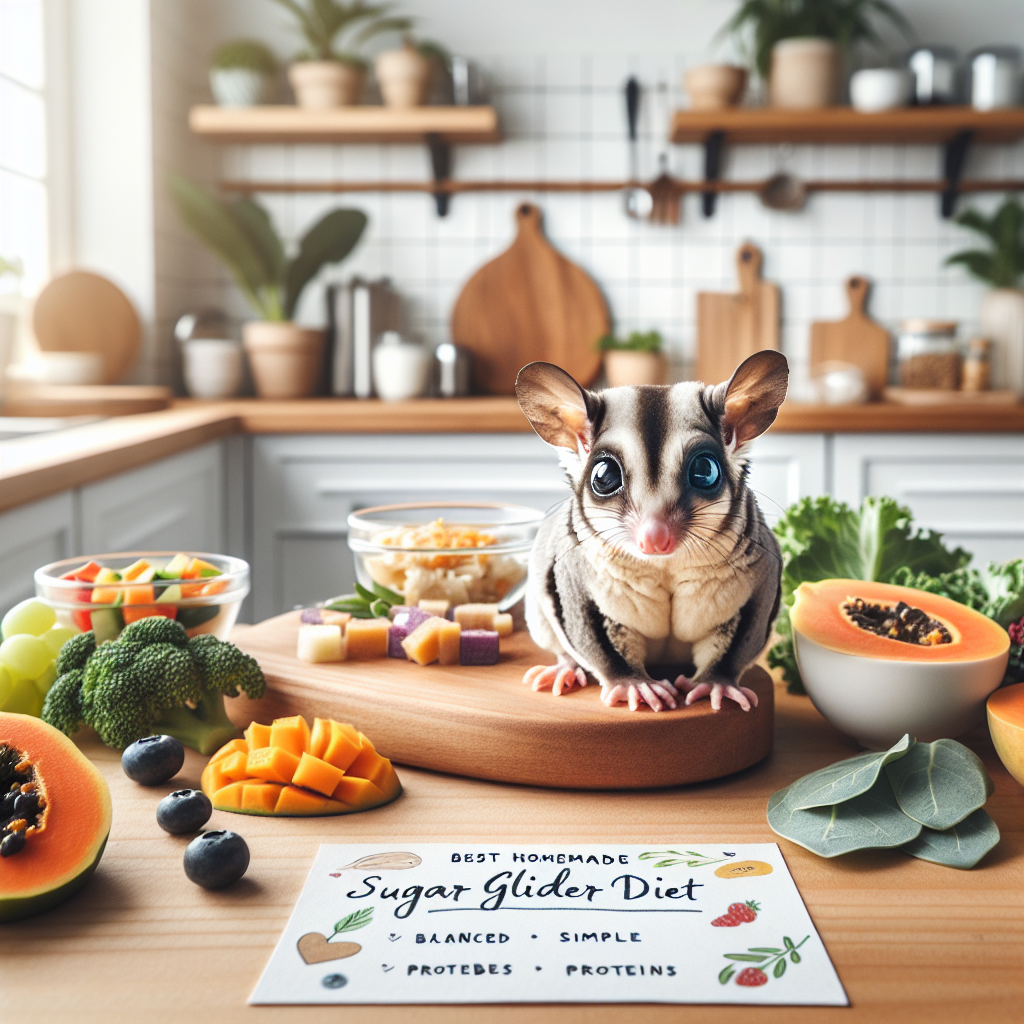
Why Your Sugar Glider’s Diet Matters
If you’re lucky enough to share your home with a sugar glider, you already know these little guys are full of personality. But just like any pet, they need the right balance of nutrients to stay healthy, happy, and active.
So, what should you feed your sugar glider? Sure, there are commercial options out there, but many owners prefer homemade diets to control quality and ingredients. The trick is creating a balanced, vet-approved sugar glider diet that’s easy to make and keeps your furry buddy thriving.
Let’s break down what that looks like!
The Basics of a Balanced Sugar Glider Diet
Sugar gliders are small marsupials native to Australia, and in the wild, they eat a mix of fruits, vegetables, insects, and tree sap. To replicate this in captivity, we need to focus on three main things:
- Protein – for muscle and tissue health
- Fruits and vegetables – for vitamins, minerals, and fiber
- Calcium and vitamins – to avoid deficiencies and support bone strength
Many homemade diets fall short on calcium or have too much phosphorus, which can cause serious health problems like nutritional secondary hyperparathyroidism. That’s a big reason why putting together a proper plan—and sticking to it—is so important.
Popular Homemade Diet Options
There isn’t just one way to feed your sugar glider, and over the years, several tried-and-tested homemade diets have become popular in the glider community. Here are a few of the most recommended:
BML (Bourbon’s Modified Leadbeater’s Diet)
This is one of the most widely used diets, and it’s backed by many vets and breeders. It’s fairly simple once you gather the ingredients. The base mix is made in advance, frozen into cubes, and served nightly.
Main ingredients include:
- Gerber chicken baby food (no seasonings)
- Honey
- Boiled egg
- Calcium supplement (like Rep-Cal)
- Multivitamin supplement (Herptivite)
- High-protein cereal
You’ll also serve it with a side of veggies and fruits. However, BML has a strict fruit and veggie list—so double-check before feeding.
HPW (High Protein Wombaroo) Diet
Another favorite is the HPW diet. It’s similar in setup to BML, with a frozen base that includes:
- Wombaroo High Protein Supplement (available online)
- Honey
- Boiled egg
- Pollen (like bee pollen)
This is also served with fruits, veggies, and even some insects like mealworms if you’re up for it!
The TPG Diet (The Pet Glider Diet)
Looking for a more flexible option? The TPG diet is less strict on which fruits and vegetables you can serve. It includes:
- Lean protein (like boiled chicken or eggs)
- Fresh fruits and veggies
- Special supplement blend sold by The Pet Glider store
The TPG diet requires daily prep, which can be a little more time-intensive.
What Fruits and Veggies Are Safe?
This is a common question for sugar glider parents. While fruits and veggies are essential, not all are safe. Some foods are too high in oxalates or can mess with calcium absorption.
Safe options include:
- Apples (no seeds)
- Blueberries
- Melon
- Papaya
- Carrots
- Sweet potatoes
- Green beans
- Squash
Foods to avoid:
- Onions and garlic
- Rhubarb
- Avocado (toxic in high amounts)
- Fruit seeds and pits (like apple seeds or cherries)
Always wash produce thoroughly and cut it into small, glider-sized pieces.
Insects and Protein Sources
While bugs might not be your idea of a tasty treat, your sugar glider might disagree! Gliders naturally hunt insects, and in captivity some mealworms, crickets, or even small amounts of boiled chicken provide great protein variety.
That said, never rely solely on insects—they don’t meet all nutritional needs. Think of them as an add-on or occasional treat.
Supplements: Why They Matter
Even the best homemade diet can miss key nutrients. That’s where supplements come in.
Most popular diets require:
- Calcium – helps balance the calcium-to-phosphorus ratio
- Multivitamins – fills in nutrient gaps, especially vitamins A and D3
Using name-brand, vet-approved products is essential. Too little won’t help, too much can harm. If you’re unsure, ask a glider-knowledgeable vet for guidance.
Helpful Feeding Tips
Now that you know what to feed your glider, here are a few practical tips to make the process easier and healthier:
- Stick to a schedule – Gliders are nocturnal, so offer food in the evening when they’re most active.
- Remove uneaten food in the morning – This prevents spoilage and keeps the cage clean.
- Use shallow dishes – Helps prevent mess and lets your glider eat comfortably.
- Observe eating habits – If your glider suddenly stops eating, it’s time to call the vet.
Homemade Doesn’t Mean Complicated
When you first start out, homemade diets might seem like a lot of work. But once you prep a batch and freeze it in daily portions, things get much easier.
Think of it like planning your own meals for the week—just with smaller containers and cuter diners.
As a bonus, making your sugar glider’s meals gives you control over ingredient quality, avoids unnecessary preservatives, and can even save money in the long run.
Vet Approval: A Must
One last (but very important) note: always run your sugar glider’s diet plan by a veterinarian who’s experienced with exotic pets. Not all vets are familiar with sugar gliders, so it’s worth finding a specialist.
A vet can help tweak the diet to suit your glider’s specific needs—whether it’s weight control, age-related changes, or health concerns.
Wrapping It Up
Creating the best homemade sugar glider diet isn’t about perfection—it’s about balance, consistency, and care. By choosing a trusted recipe, using the right ingredients, and supplementing smartly, you’ll help your sugar glider live a long and bouncy life.
And hey—when you see them glide from one corner of the room to the other with full energy and a happy squeak, you’ll know you’re doing something right.
Go ahead, prep that fruity meal, and give your sugar glider a reason to love dinnertime tonight!


